
Small-area graduation.
The upper side often remains relatively full. Most of the shortening happens toward the temple, sideburn or neckline.
Often more restrained
HAIRCUT COMPARISON GUIDE
A taper usually shortens hair mainly around the temples and neckline. A fade generally blends through more of the sides and back. Either can be subtle or sharp, and neither name tells you the exact clipper length. The clearest distinction is where the shortest hair sits and how far the blend travels.
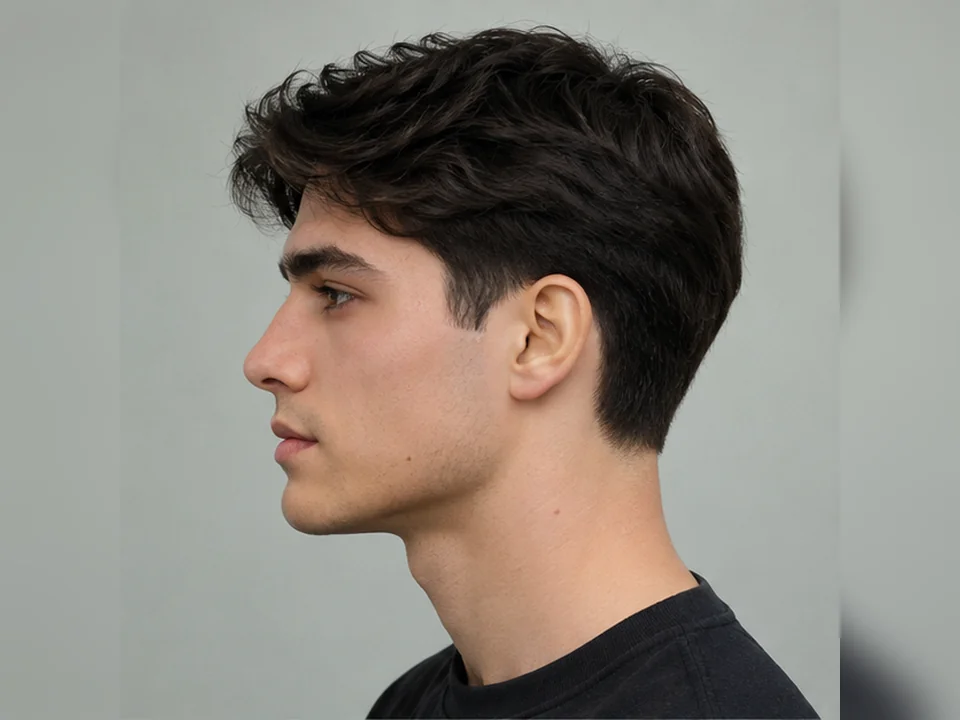 Edges stay fuller
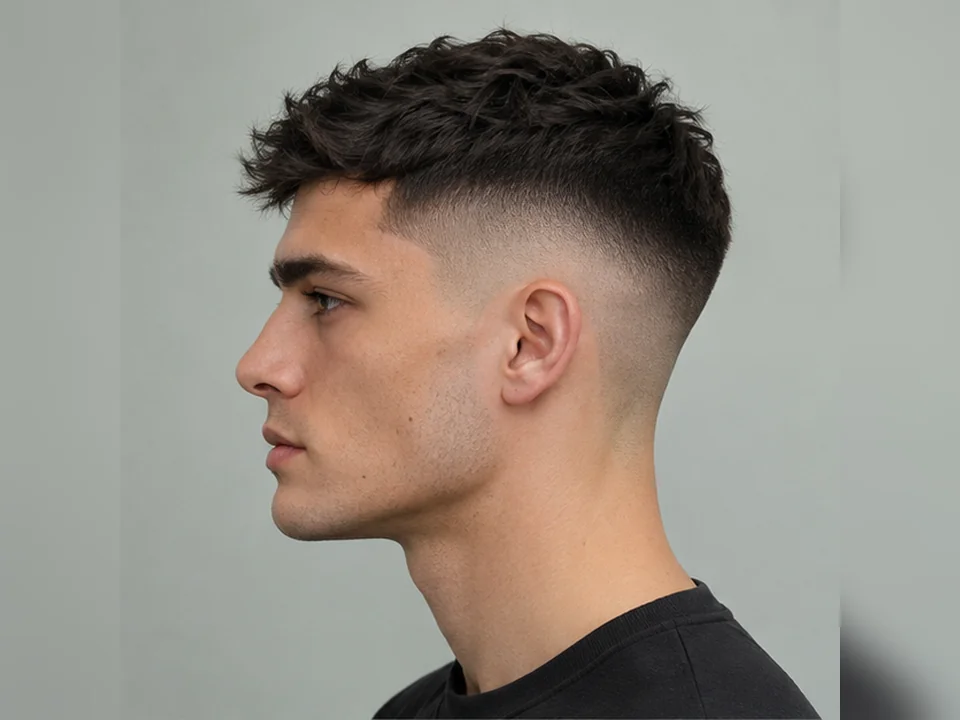 Broader side blend
Illustrative AI-generated hairstyle references show typical blends, not precise clipper lengths. The same terms can vary between barbers.
01 / AT A GLANCE
A haircut name can describe the overall look, but these visible details make the difference easier to spot in a reference photo.
The upper side often remains relatively full. Most of the shortening happens toward the temple, sideburn or neckline.
Hair becomes shorter over a wider section of the sides and back. The transition can start low, in the middle or high.
| Detail | Taper haircut | Fade haircut |
|---|---|---|
| Where the blend sits | Mostly near the sideburns, temples and nape | Extends farther across the sides and back |
| Hair above the ears | Often stays fuller | Usually becomes progressively shorter through a broader area |
| Shortest length | May remain visibly short or reach skin near the edges | May end at skin or at a short clipper length |
| Overall contrast | Often subtle and natural | Can be subtle or strong, depending on height and length |
| Hairline and neckline | Often has a neat, softly graduated outline | Can blend the back and sides into a shorter base |
| Growing out | Frequently looks softer between trims | Sharper contrasts may become obvious sooner |
| Best way to request it | Point to the edges you want shortened | Specify low, mid or high, plus the shortest length |
These are typical barbershop distinctions, not universal definitions. A haircut can combine tapering and fading, and different professionals may use the same name differently.
02 / KNOW THE CUTS
Both use a gradual change in length. Their everyday meanings differ mainly in how much of the head is closely blended.
A taper is a controlled reduction in hair length. In a typical men's haircut request, a taper keeps the hair fuller on most of the side and shortens it around the temple, sideburn and nape. The top can be cropped, curly, textured or longer.
A low taper usually sits near the edges. A higher taper can cover a little more area, but barber terminology varies. A taper does not require bald skin. A barber can finish the shortest point at a clipper length that leaves visible hair.
How to recognize it: Look for an otherwise full side with a neat, short transition immediately beside the ears or at the neckline.
A fade blends longer hair into progressively shorter lengths across the sides and back. The smooth gradient is often more noticeable than a small edge taper, although some low fades are subtle.
A low fade starts near the bottom of the head. A mid fade reaches higher around the sides. A high fade carries the shorter section toward the upper sides. A skin fade finishes at bare skin, regardless of how high it begins.
How to recognize it: Check whether the graduation covers a broad section around the ear and behind it rather than only the outline.
03 / THE CONFUSING NAME
“Taper fade” is widely used, but it is not a universally precise third category. Think about the requested outcome rather than relying on the term alone.
Usually means tidying the temples, sideburns and neckline while retaining more length through the upper sides.
Say: “Keep the sides fuller.”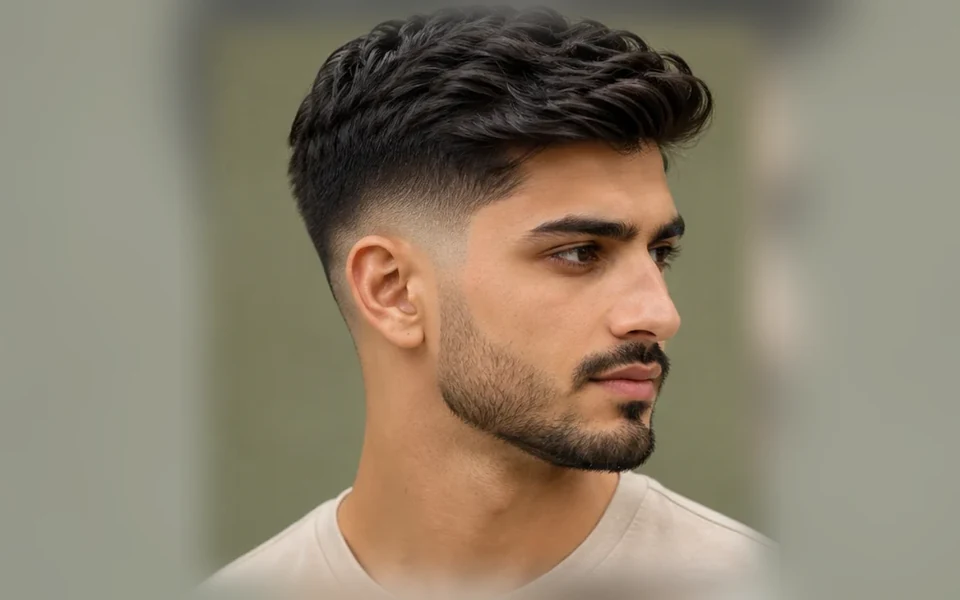
May refer to a defined low taper or a more noticeable fade with tapered edges. Different shops use the phrase differently.
Say: “Let me show you the blend.”Usually refers to an extended transition around the sides and back, with the blend height and shortest length chosen separately.
Say: “Start it low, mid or high.”The most useful haircut request names the area, the height, the shortest length and how much hair should remain above the blend.
04 / THE CLOSE COMPARISON
Both cuts begin near the lower hairline. The main question is how far the blended region continues around the head.
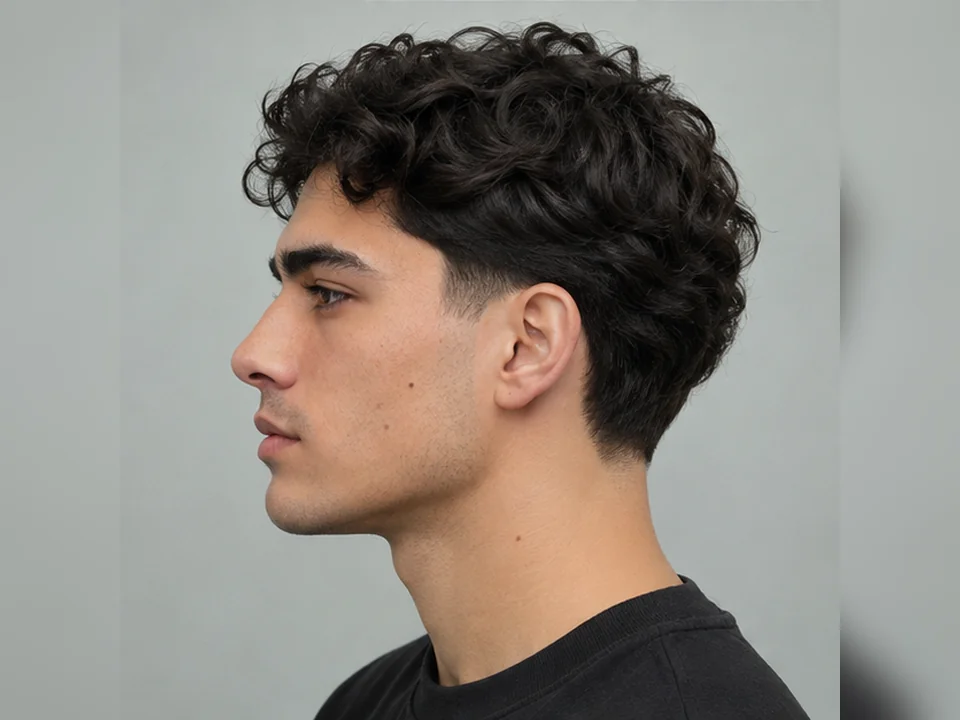
In many barbershops, a low taper is concentrated at the sideburn and nape. The hair above and behind the ear can remain relatively full.
Spot it: The closely cut section is small and contained near the outline.
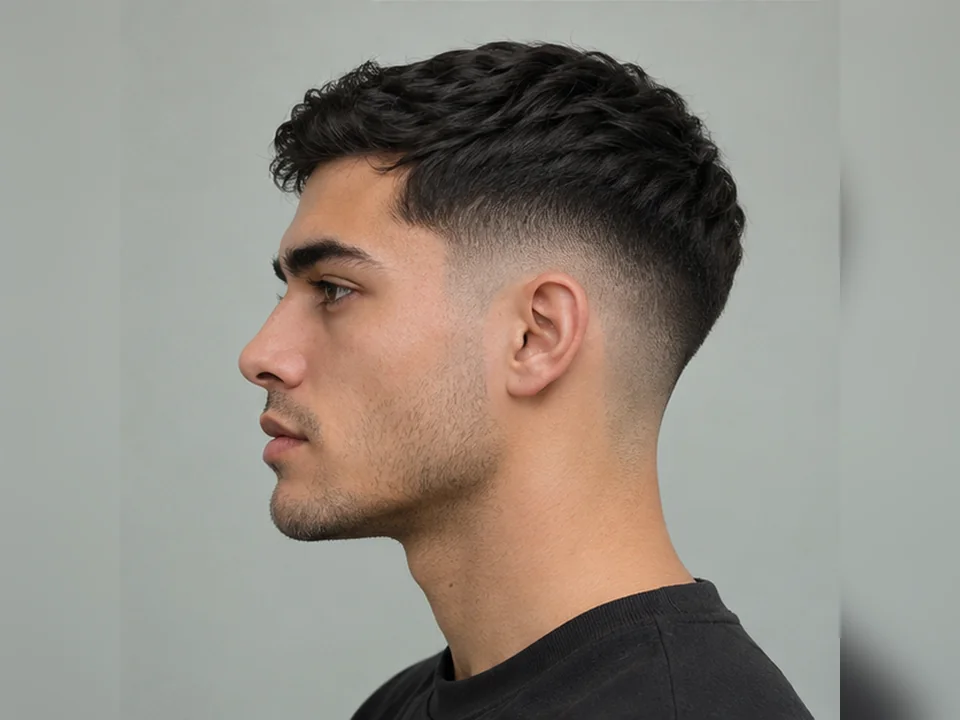
A low fade can start just above the hairline but blends across more of the lower side and back. It still leaves more length above the gradient.
Spot it: The shortest section follows a broader path around the side and back.
These AI-generated side-profile references use similar angles for easier comparison. They illustrate common haircut shapes but do not define a universal barber terminology.
The shortest blending stays near the temple and nape. Most of the upper side remains fuller, so the haircut keeps a relatively natural outline.
The transition starts low but travels around more of the head. Unlike a localized taper, the fade generally affects a larger area above the neckline and ears.
The graduation sits farther up the side than a low fade. It creates a more noticeable contrast while allowing many different lengths and styles on top.
The shorter area extends relatively high toward the temples. The result often makes the length on top stand out more clearly.
A skin fade blends down to bare skin at its shortest point. It can be low, mid or high: skin describes the finish, not the height.
Some barbers use taper fade for a localized edge taper; others mean a fuller fade with a tapered finish. Always specify the area you want blended.
05 / WHICH LOOK FITS?
There is no single best choice for every face shape or hair texture. Your preferred contrast, desired length and willingness to maintain the cut are more useful starting points.
Browse haircut namesYou want a clean edge but prefer to keep the upper sides fuller, with a relatively soft transition as the haircut grows.
You like a clearly graduated side and back, want more contrast with your top length, or want to specify a low, mid or high blend.
Your curls or coils shrink, the hairline is uneven, or you do not want to return frequently for a crisp finish. The final result depends on your own hair and barber's technique.
06 / USE YOUR REFERENCE PHOTO
When you are not sure whether a photo shows a taper, a low fade or a skin fade, look beyond the top hairstyle. Focus on the transition around the temples, ears and neckline.
A single front view cannot always reveal how the side and back connect. A clear side angle and a back view help a barber interpret the reference. A photo identifier can suggest likely terms, but it cannot reliably determine an exact clipper guard number from an image.
Identify the haircut in your photoIs only the area beside the forehead noticeably shorter, or does the shorter region travel up the side?
Find where the blend starts and how far it continues behind the ear.
A small, neat nape taper can exist even when the rest of the back stays relatively long.
Visible scalp might indicate a skin-level finish, but strong lighting can make very short hair look lighter.
A side image may hide a back taper. Ask for the back view whenever the distinction is uncertain.
08 / COMMON QUESTIONS
Quick explanations of the haircut names people often hear in barbershops and search for online.
In everyday barbershop use, a taper often means a short transition concentrated around the temples and neckline. A fade generally creates a graduated change across more of the sides and back. The terms can overlap, so the location and shortest length matter more than the label alone.
Not necessarily. Some professionals use taper fade as another name for a taper at the edges; others use it for a more noticeable fade. Show your reference and specify where the blend should stop.
They can look similar, but a low taper usually concentrates the shortest hair near the temples and nape. A low fade usually carries the graduation farther around the sides and back, even though it starts close to the hairline.
No. A fade can finish at a short clipper length without exposing bare skin. A skin fade, also called a bald fade, specifically blends down to skin at its shortest point.
A restrained taper often grows out with a softer visible transition because more hair is left on the sides. A closely shaved or high-contrast fade may lose its crisp appearance sooner. Actual upkeep depends on the starting lengths, hair texture and your preference.
Yes. A taper can tidy the temples and neckline while retaining curls or coils on top and through the sides. Ask your barber how much length to preserve, especially where shrinkage changes the appearance.
Bring a front, side and back reference if possible. Describe how short you want the sides, whether you want scalp visible, how high the blend should go and how much length to leave on top. Ask your barber to show the difference before starting.
Upload a reference photo to get likely haircut names, visible features and an explanation you can show to a barber.